


NetSuite Warehouse Management Suite App: 7 Costly Warehouse Mistakes to Fix First
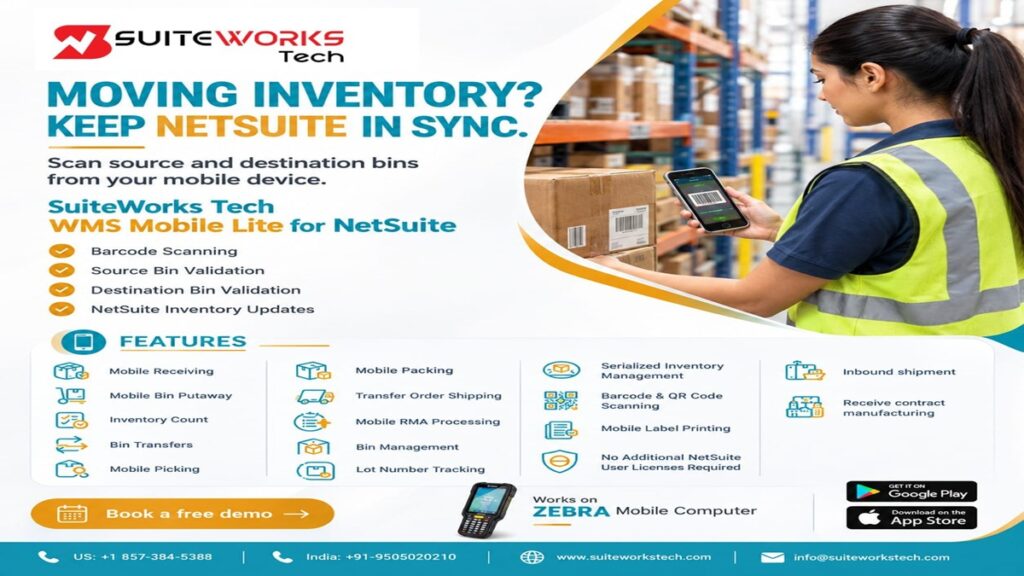
NetSuite Warehouse Management Suite App: 7 Costly Warehouse Mistakes to Fix First By Manasa, Sr. NetSuite Solution Architect at SuiteWorks TechSeptember 16, 2026 A warehouse can look organized from the outside and still have problems happening throughout the day. An employee receives inventory but has to return to a workstation to update the system. Another employee picks an order but manually checks the item before entering the transaction. Inventory moves between bins, but the location update happens later. A count is written on paper before someone eventually enters it into NetSuite. None of these activities may seem like a major issue on its own. But when they happen repeatedly, they can make warehouse execution slower and create unnecessary manual work. This is where NetSuite Warehouse Management can become more connected to the actual work happening on the warehouse floor. The NetSuite WMS Mobile App by SuiteWorks Tech brings warehouse execution to iPhone and Android devices. It supports receiving, putaway, picking, packing, shipping, inventory counting, bin transfers, returns, barcode and QR code scanning, lot and serial tracking, and mobile label printing while keeping warehouse transactions synchronized with NetSuite. Instead of looking at warehouse mistakes only after they happen, it is useful to understand where everyday warehouse processes can become disconnected. Here are seven areas worth examining first. 1. NetSuite Warehouse Management Mistake: Keeping Receiving Separate From the System Receiving is the moment when incoming inventory enters the warehouse. An employee needs to identify the products, verify quantities, and capture relevant lot, serial number, and bin information. If this information is handled separately from the ERP workflow, additional steps can be introduced. The WMS Mobile Lite solution allows warehouse employees to receive inventory directly from an iPhone or Android device against NetSuite Purchase Orders. Barcode and QR code scanning can validate: 🔹 Items 🔹 Quantities 🔹 Lots 🔹 Serial numbers 🔹 Bins This allows the employee to work with the physical inventory while capturing the required information through the mobile workflow. Inbound Shipment Information Should Stay Connected Inbound shipment management is also available through the mobile application. Warehouse users can view inbound shipment details, receive items against associated purchase orders, and capture lot, serial, and bin information during receiving. This creates a more direct connection between the shipment arriving at the warehouse and the information being updated in NetSuite. The issue is not simply whether inventory is received. It is whether the receiving activity and inventory information remain connected during the process. 2. NetSuite Warehouse Management Mistake: Putting Inventory Away Without Mobile Validation Receiving inventory is only the beginning. After goods arrive, they need to be placed into the correct warehouse bins. If employees have to rely on separate processes to identify and update locations, inventory placement can become less connected to the warehouse system. Mobile bin putaway allows warehouse staff to use NetSuite Putaway Worksheets from their mobile devices. Employees can scan: 🔹 Destination bins 🔹 Items The solution also supports Bin Management by validating source and destination bins during receiving, putaway, picking, transfers, and inventory counting. This keeps inventory location information connected with physical warehouse movement. In a NetSuite Warehouse Management workflow, knowing that an item exists is important. Knowing where that item is located is equally important for the next warehouse activity. 3. NetSuite Warehouse Management Mistake: Treating Picking as a Manual Process Picking is one of the most active parts of warehouse execution. An employee needs to locate the correct inventory and pick it against the appropriate sales order. When multiple orders are being processed, unnecessary warehouse travel can make the process more time-consuming. The NetSuite WMS Mobile App by SuiteWorks Tech supports picking against one or multiple NetSuite Sales Orders using barcode or QR code scanning. Real-time inventory validation helps warehouse employees validate inventory during the picking activity. For businesses handling multiple orders, batch picking provides another workflow. Instead of making separate trips for individual sales orders, employees can pick multiple sales orders in a single trip. This means a mobile workflow can connect the sales order, inventory item, scanning activity, and fulfillment process. Why Batch Picking Matters The supplied WMS content specifically identifies reduced warehouse travel as one of the benefits of batch picking. The process can therefore become: 🔹 Select multiple sales orders 🔹 Move through the warehouse 🔹 Scan the required items 🔹 Validate inventory 🔹 Complete the picking activity The goal is not to add more technology to the picking process. It is to bring the required warehouse transaction closer to where picking actually happens. 4. NetSuite Warehouse Management Mistake: Creating a Gap Between Picking, Packing, and Shipping Picking does not finish the warehouse workflow. Once items have been picked, they need to be packed and shipped. The WMS Mobile Lite solution allows warehouse employees to confirm packed quantities through the mobile application. The NetSuite Item Fulfillment status can then be updated to Packed. The process can continue into mobile shipping. Employees can ship completed orders against one or multiple NetSuite Sales Orders. Barcode scanning can be used to confirm shipments while Item Fulfillment and inventory are automatically updated in NetSuite. This creates a connected fulfillment sequence: 🔹 Pick 🔹 Pack 🔹 Confirm 🔹 Ship 🔹 Update fulfillment and inventory When these activities are connected, warehouse employees can continue working from the warehouse floor instead of moving between physical operations and separate system updates. For NetSuite Warehouse Management, this connection between physical fulfillment and system transactions is an important part of the mobile workflow. 5. NetSuite Warehouse Management Mistake: Using Paper for Inventory Counts Inventory counting is another area where warehouse processes can become disconnected. A warehouse employee may need to count inventory by item, bin, lot, or serial number. The WMS Mobile Lite solution supports complete and partial inventory counts directly from mobile devices without paper count sheets. Inventory can be counted by: 🔹 Item 🔹 Bin 🔹 Lot 🔹 Serial number The employee can move through the warehouse and capture inventory information directly through the
NetSuite Barcoding Mobile App: How to Build a Faster Scan-to-Transaction Workflow
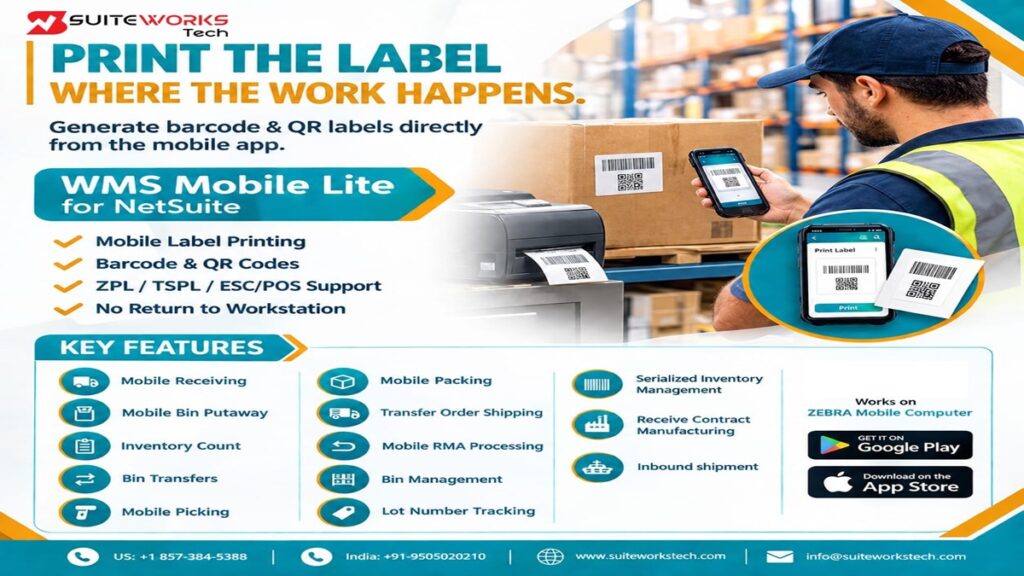
NetSuite Barcoding Mobile App: How to Build a Faster Scan-to-Transaction Workflow By Manasa, Sr. NetSuite Solution Architect at SuiteWorks TechSeptember 16, 2026 A warehouse transaction often begins with something very simple: an employee picks up an item and scans it. But behind that scan, several things may need to happen. The item needs to be identified, the quantity needs to be validated, the correct bin may need to be confirmed, and the resulting warehouse transaction needs to reach NetSuite accurately. When these activities are connected, scanning becomes more than just a way to identify products. It becomes part of the warehouse execution workflow. This is where NetSuite Barcoding can support a faster scan-to-transaction process. The NetSuite WMS Mobile App by SuiteWorks Tech brings barcode and QR code scanning to iPhone and Android devices, allowing warehouse employees to perform receiving, picking, packing, shipping, inventory counting, transfers, returns, and other activities through mobile workflows. The solution works natively within NetSuite, with warehouse transactions and fulfillment updates synchronized with the ERP. Why NetSuite Barcoding Matters for Warehouse Transactions Consider a receiving employee standing beside a newly arrived shipment. The employee needs to check what has arrived and make sure the information is correctly captured. With mobile scanning, the employee can scan the barcode or QR code directly from an iPhone or Android device. The WMS Mobile Lite solution supports scanning for: 🔹 Items 🔹 Quantities 🔹 Lots 🔹 Serial numbers 🔹 Bins The information can be captured while the employee is handling the inventory rather than being recorded separately and entered later. This creates a simple scan-to-transaction flow: 🔹 Identify the item 🔹 Scan the barcode or QR code 🔹 Validate the required inventory information 🔹 Complete the warehouse activity 🔹 Synchronize the transaction with NetSuite The supplied WMS Mobile Lite webpage states that its mobile workflows use barcode scanning to validate warehouse actions and instantly sync them with NetSuite. NetSuite Barcoding for Mobile Receiving Receiving is one of the first places where a warehouse can benefit from connected scanning. The NetSuite WMS Mobile App by SuiteWorks Tech allows warehouse employees to receive inventory directly from an iPhone or Android device against NetSuite Purchase Orders. During receiving, barcode or QR code scanning can be used to validate: 🔹 Items 🔹 Quantities 🔹 Lots 🔹 Serial numbers 🔹 Bins This means the employee can work directly with the incoming inventory while capturing the required information through the mobile application. Inbound Shipment Management Receiving can also involve inbound shipment information. The mobile application allows warehouse employees to: 🔹 View inbound shipment details 🔹 Receive items against associated purchase orders 🔹 Capture lot information 🔹 Capture serial information 🔹 Capture bin information The scan therefore becomes part of the receiving workflow rather than a separate identification step. Once inventory is received, the process can continue into putaway. Mobile Bin Putaway After receiving, inventory needs to reach the correct warehouse location. Mobile bin putaway allows employees to use NetSuite Putaway Worksheets from their mobile devices. They can scan destination bins and items while placing inventory. Bin Management also supports validation of source and destination bins during: 🔹 Receiving 🔹 Putaway 🔹 Picking 🔹 Transfers 🔹 Inventory counting This helps keep item and location information connected during physical inventory movement. NetSuite Barcoding for Picking and Batch Fulfillment Once inventory has been received and stored, another employee may need to pick it for a sales order. Picking requires the employee to identify the correct inventory and quantity. The mobile picking workflow supports barcode and QR code scanning against one or multiple NetSuite Sales Orders. Real-time inventory validation helps warehouse employees verify the inventory while performing the task. For businesses handling multiple orders, batch picking provides another workflow. Instead of making separate warehouse trips for individual sales orders, employees can pick multiple sales orders during one trip. This can help reduce warehouse travel time while supporting faster order fulfillment. The scan-to-transaction process therefore continues from receiving into order fulfillment: 🔹 Receive the inventory 🔹 Put it into the correct bin 🔹 Select the sales order 🔹 Scan the required item 🔹 Validate inventory 🔹 Complete the picking activity Each stage is connected to the warehouse information maintained within NetSuite. NetSuite Barcoding for Packing and Shipping Picking is only one part of order fulfillment. Once the products have been picked, they need to be packed and prepared for shipment. The mobile packing functionality allows warehouse employees to confirm packed quantities directly through the mobile application. The NetSuite Item Fulfillment status can then be updated to Packed. The workflow continues into mobile shipping. Employees can ship completed orders against one or multiple NetSuite Sales Orders. Barcode scanning can be used to confirm shipments while Item Fulfillment and inventory are automatically updated in NetSuite. This creates a connected sequence: 🔹 Picking 🔹 Packing 🔹 Shipping Instead of treating scanning as a standalone warehouse function, it becomes part of the complete fulfillment process. NetSuite Barcoding for Inventory Counts Inventory counting is another warehouse process where scanning can connect physical activity with system information. The WMS Mobile Lite solution supports complete and partial inventory counts directly from mobile devices. Warehouse employees can count inventory by: 🔹 Item 🔹 Bin 🔹 Lot 🔹 Serial number Paper count sheets are not required for these mobile counting workflows. Employees can move through the warehouse, identify the inventory, capture the required quantity and inventory details, and update NetSuite. This approach also supports more detailed inventory tracking. For lot-numbered inventory, the solution supports receiving, moving, counting, picking, and shipping through barcode scanning. For serialized inventory, employees can scan individual serial numbers during: 🔹 Receiving 🔹 Inventory counts 🔹 Transfers 🔹 Picking 🔹 Packing 🔹 Shipping 🔹 Returns This helps maintain product traceability while reducing manual serial number entry. NetSuite Barcoding for Bin Transfers and Transfer Order Shipping Warehouse inventory is frequently moved. An item may need to move from one bin to another, while inventory may also need to be transferred between warehouse
NetSuite WMS: What High-Volume Warehouses Need to Know Before Scaling
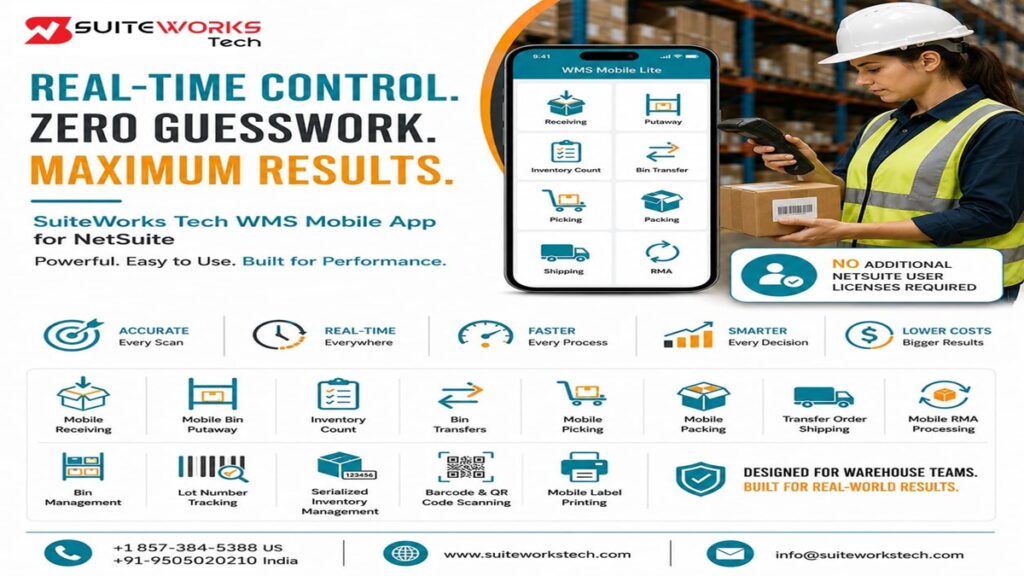
NetSuite WMS: What High-Volume Warehouses Need to Know Before Scaling By Manasa, Sr. NetSuite Solution Architect at SuiteWorks TechSeptember 11, 2026 A warehouse can look completely different once order volume starts increasing. What worked when a team handled a smaller number of incoming shipments may become harder to manage when receiving, picking, packing, shipping, inventory counting, and transfers are happening throughout the day. A warehouse employee may be receiving goods while another team member is picking a Sales Order. At the same time, inventory may need to be moved between bins, another order may be ready for packing, and a separate count may be taking place. As these activities grow, warehouse teams need a way to execute daily tasks quickly while keeping inventory information connected with the ERP. This is where NetSuite WMS can support a more connected warehouse workflow. Mobile devices can bring essential warehouse activities directly to employees on the warehouse floor, allowing them to receive, pick, pack, ship, count, transfer, and process returns while synchronizing transactions with NetSuite. The NetSuite WMS Mobile App by SuiteWorks Tech provides these capabilities through mobile devices, including iPhone and Android smartphones.The WMS Mobile App is also compatible with Zebra mobile computers, giving warehouse teams the flexibility to use dedicated mobile computing and scanning devices for warehouse operations. The solution is designed for businesses that need warehouse mobility without adding unnecessary complexity or additional NetSuite user licenses for warehouse operators. Why NetSuite WMS Becomes Important as Warehouse Volume Grows Scaling a warehouse is not simply about handling more products. More inventory can mean more receiving activities, more warehouse locations, more Sales Orders, more picking, and more movement between bins. When employees spend time navigating between physical warehouse tasks and manual system updates, the connection between what is happening on the warehouse floor and what is recorded in the ERP can become difficult to maintain. NetSuite WMS provides a mobile execution approach where warehouse users can perform guided activities from their mobile devices. These activities include: 🔹 Receiving inventory against NetSuite Purchase Orders 🔹 Managing inbound shipments 🔹 Putting inventory into warehouse bins 🔹 Picking against Sales Orders 🔹 Batch picking multiple Sales Orders 🔹 Packing completed orders 🔹 Shipping orders 🔹 Shipping Transfer Orders 🔹 Counting inventory 🔹 Transferring inventory between bins 🔹 Processing customer and vendor returns For a high-volume warehouse, having these activities connected within one workflow can make daily execution more straightforward. Moving Warehouse Tasks Closer to the Inventory Warehouse employees are physically working with products, bins, and shipments. A mobile approach allows them to perform warehouse transactions from the same location where the physical work is happening. Instead of depending entirely on a workstation for each activity, employees can use mobile devices to scan items, validate information, and complete warehouse tasks. That makes mobility an important part of warehouse execution as operations expand. NetSuite WMS for Receiving More Inventory Efficiently Receiving is often the first major warehouse activity after products arrive. When inventory is received against a NetSuite Purchase Order, employees need to confirm the items and quantities while capturing relevant inventory details. The mobile receiving capability allows employees to work directly from an iPhone or Android device. Barcode and QR code scanning can be used to validate: 🔹 Items 🔹 Quantities 🔹 Lots 🔹 Serial numbers 🔹 Bins Inventory can then be updated in real time. Managing Inbound Shipments From Mobile Devices As warehouse volume increases, inbound shipments can also become more frequent. The mobile application allows employees to view inbound shipment details, receive items against associated Purchase Orders, and capture lot, serial, and bin information during receiving. This keeps the receiving activity connected with the inventory information inside NetSuite. For a warehouse handling higher volumes, having receiving information captured while the employee is performing the task provides a more direct workflow. NetSuite WMS and Accurate Bin Putaway Receiving inventory is only one part of warehouse execution. After goods arrive, they need to be placed into the correct warehouse bins. The mobile bin putaway capability works with NetSuite Putaway Worksheets. Warehouse staff can scan the destination bin and the item directly through the mobile application. This helps validate the location where inventory is being placed. Bin management also plays a role across several warehouse activities, including: 🔹 Receiving 🔹 Putaway 🔹 Picking 🔹 Transfers 🔹 Inventory counting When the source and destination bins can be validated during these activities, warehouse teams can maintain more accurate inventory locations as products move through the facility. NetSuite WMS for High-Volume Picking Picking becomes particularly important when a warehouse is processing multiple Sales Orders. Employees need to locate the correct inventory and pick the required products accurately. The mobile picking workflow allows warehouse users to pick against one or multiple NetSuite Sales Orders using barcode or QR code scanning. Real-time inventory validation helps employees verify the products being picked. This creates a direct link between the physical item and the Sales Order being processed. Batch Picking for Multiple Sales Orders High-volume operations may have several Sales Orders waiting for fulfillment. Instead of making separate trips for individual orders, employees can use batch picking to pick multiple Sales Orders during a single trip. This reduces warehouse travel time while supporting faster order fulfillment. For warehouses experiencing increasing order activity, batch picking can therefore become an important part of the mobile warehouse workflow. Keeping Packing and Shipping Connected After products are picked, they move into another important stage: packing and shipping. The mobile packing capability allows employees to confirm packed quantities through the mobile application and update the NetSuite Item Fulfillment status to Packed. The process can then continue into shipping. Employees can ship completed orders against one or multiple NetSuite Sales Orders. Barcode scanning can be used to confirm shipments while Item Fulfillment and inventory information are updated in NetSuite. Managing Inventory Moving Between Locations Not every shipment is going directly to a customer. Inventory may also need to move between warehouse locations through Transfer Orders.
NetSuite Barcode Scanning: A Smarter Approach to Stock Movement and Tracking
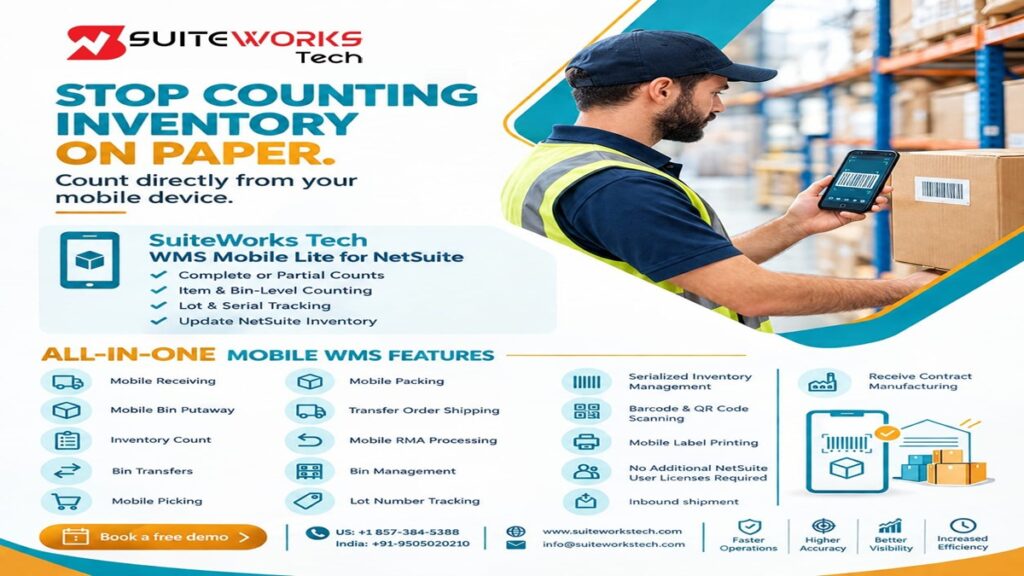
NetSuite Barcode Scanning: A Smarter Approach to Stock Movement and Tracking By Manasa, Sr. NetSuite Solution Architect at SuiteWorks TechSeptember 11, 2026 Stock movement is a continuous part of warehouse operations. An item may arrive against a Purchase Order, move into a warehouse bin, get picked for a Sales Order, go through packing and shipping, or move between warehouse locations. At each stage, warehouse teams need accurate information about the item and its location. This is where NetSuite Barcode Scanning can make everyday warehouse activities more connected. Instead of relying completely on manual data entry, warehouse employees can use barcode and QR code scanning from mobile devices to validate inventory during receiving, putaway, picking, packing, shipping, transfers, and counting. The NetSuite WMS Mobile App by SuiteWorks Tech extends these warehouse activities to iPhone and Android devices while keeping transactions synchronized with NetSuite in real time.The WMS Mobile App is also compatible with supported Zebra mobile computers, giving warehouse teams the flexibility to use dedicated mobile scanning devices for everyday warehouse operations. For businesses using NetSuite, the purpose of barcode scanning is not simply to scan an item. It is to connect physical warehouse activity with the inventory information maintained inside the ERP. Why NetSuite Barcode Scanning Matters in a Moving Warehouse Think about a warehouse during a normal working day. A shipment arrives. The receiving team needs to identify the products, confirm quantities, and capture relevant lot, serial, and bin information. Once receiving is complete, the inventory needs to be placed into the appropriate warehouse locations. Later, another employee may need to pick some of those same products for a customer order. The physical inventory has moved several times, and every movement needs to be reflected accurately in the system. NetSuite Barcode Scanning provides a mobile approach to these activities by allowing employees to scan barcodes or QR codes while performing warehouse tasks. Scanning can support: 🔹 Receiving inventory 🔹 Bin putaway 🔹 Picking Sales Orders 🔹 Packing orders 🔹 Shipping completed orders 🔹 Transfer Order shipping 🔹 Inventory counting 🔹 Bin transfers 🔹 Returns The result is a workflow where warehouse employees can validate inventory information while the physical task is taking place. Connecting the Item With Its NetSuite Transaction A scan becomes especially useful when it is connected to the corresponding transaction. Instead of an employee completing a warehouse activity and entering the information later, the mobile workflow allows the employee to scan and update the relevant information during the activity. This can help reduce manual data entry and keep warehouse transactions synchronized with NetSuite. NetSuite Barcode Scanning for Receiving and Inventory Putaway Receiving is one of the first stages in the warehouse journey. When inventory arrives against a NetSuite Purchase Order, warehouse employees need to confirm what has arrived and ensure the relevant information is captured correctly. The mobile receiving workflow allows employees to receive inventory from an iPhone or Android device. Barcode and QR code scanning can be used to validate: 🔹 Items 🔹 Quantities 🔹 Lots 🔹 Serial numbers 🔹 Bins The inventory information can then be updated in real time. Once the receiving process is completed, the products need to reach their correct warehouse locations. Scanning the Destination Bin During Putaway Putaway is another important point in stock movement. The mobile bin putaway capability works with NetSuite Putaway Worksheets. Warehouse staff can scan the item and destination bin directly from their mobile device. This provides a practical way to validate where received inventory is being placed. Bin management can also be supported during receiving, putaway, picking, transfers, and inventory counting. By validating source and destination locations through scanning, warehouse teams can maintain more accurate inventory location information throughout the movement process. Tracking Inventory as It Moves Between Warehouse Bins Not every inventory movement involves a customer shipment. Sometimes an item simply needs to move from one bin to another. For example, warehouse staff may need to reorganize inventory or move products to a different location within the warehouse. With mobile bin transfers, employees can scan inventory and move it between bins using an iPhone or Android device. Each transfer is synchronized with NetSuite. This means the inventory location can be updated as the physical movement takes place rather than depending on a separate manual update later. Why Bin Accuracy Is Important Imagine that NetSuite shows an item in one warehouse bin, but the physical product has already been moved somewhere else. A picker searching for that item may spend additional time looking for it. Barcode scanning provides a way to validate the inventory and bin during the movement. The same approach can be used across: 🔹 Receiving 🔹 Putaway 🔹 Picking 🔹 Transfers 🔹 Inventory counting This makes bin information an important part of keeping stock movement connected with the ERP. NetSuite Barcode Scanning for More Accurate Order Picking After inventory has been received and stored, the next stage may be order fulfillment. Warehouse employees need to locate the correct products and pick them against NetSuite Sales Orders. The mobile picking workflow supports picking against one or multiple Sales Orders using barcode or QR code scanning. Employees can scan products during picking while using real-time inventory validation. This creates a direct connection between the product being picked and the order being fulfilled. Batch Picking for Multiple Sales Orders A warehouse handling multiple orders may have several Sales Orders ready for picking at the same time. Instead of completing separate warehouse trips for every order, batch picking allows employees to pick multiple Sales Orders during one trip. This reduces warehouse travel time while supporting faster order fulfillment. Barcode scanning remains part of the workflow, allowing employees to validate the products being picked. For high-volume warehouse operations, combining mobile picking with batch picking creates a more streamlined path from stored inventory to customer fulfillment. Following Stock From Picking to Packing and Shipping The warehouse process does not end when an item is picked. The products still need to be packed
Oracle NetSuite WMS SuiteApp: The Complete Warehouse Solution for Growing Enterprises
Oracle NetSuite WMS SuiteApp: The Complete Warehouse Solution for Growing Enterprises By Manasa, Sr. NetSuite Solution Architect at SuiteWorks TechSeptember 11, 2026 A growing warehouse can become busy very quickly. One team member may be receiving incoming inventory while another is putting products away. Pickers are moving through warehouse aisles, orders are being packed, shipments are being prepared, and inventory counts may be happening at the same time. As these activities increase, keeping physical warehouse operations synchronized with the ERP becomes increasingly important. This is where Oracle NetSuite WMS can provide a connected approach to warehouse execution. Instead of relying heavily on manual data entry, warehouse teams can use mobile devices to receive goods, scan products, manage bins, pick orders, pack shipments, process returns, and update inventory transactions in real time. The NetSuite WMS Mobile App by SuiteWorks Tech is designed to extend essential warehouse activities to iPhone and Android devices while working natively inside NetSuite. The solution also supports Zebra mobile computers, giving warehouse teams the flexibility to use dedicated mobile scanning devices for everyday warehouse operations. The mobile approach also allows warehouse operators to use the solution without requiring additional NetSuite user licenses. For growing enterprises, the value is not simply having a mobile application. It is having warehouse execution connected to the NetSuite environment where inventory and fulfillment information is managed. Why Oracle NetSuite WMS Matters for Growing Enterprises Warehouse growth often means more inventory, more transactions, and more daily movement. A warehouse employee may need to receive a shipment, confirm quantities, identify lots or serial numbers, place products into bins, and later locate those same products for picking. When these activities depend on manual entry, maintaining accurate inventory information can become difficult. Oracle NetSuite WMS provides a mobile execution approach that brings warehouse activities closer to the ERP. With the mobile workflow, employees can perform activities such as: 🔹 Receiving inventory 🔹 Managing inbound shipments 🔹 Bin putaway 🔹 Picking orders 🔹 Batch picking 🔹 Packing 🔹 Shipping 🔹 Inventory counting 🔹 Bin transfers 🔹 Return processing These activities can be performed through mobile devices while transactions are synchronized with NetSuite. Bringing Warehouse Execution to the Warehouse Floor Warehouse employees are usually moving around the facility rather than sitting at a workstation. A mobile workflow allows them to scan products and complete transactions where the physical inventory is located. This makes the process more direct. Instead of recording an activity first and updating the ERP later, employees can work through guided mobile workflows connected with NetSuite. Oracle NetSuite WMS Simplifies Mobile Receiving Receiving is the starting point for many warehouse activities. When inventory arrives, employees need to identify what has been received and verify important information such as items, quantities, lots, serial numbers, and bins. The NetSuite WMS Mobile App by SuiteWorks Tech allows warehouse employees to receive inventory against NetSuite Purchase Orders using iPhone or Android devices. Barcode and QR code scanning can be used to validate the information while inventory is updated in real time. Managing Inbound Shipments Inbound shipment management is also part of the mobile receiving process. Warehouse staff can view inbound shipment details, receive items against associated purchase orders, and capture relevant lot, serial, and bin information during receiving. This helps connect the arrival of physical goods with the inventory information maintained inside NetSuite. For a growing enterprise, having this connection throughout the receiving process can support a more organized warehouse workflow. Accurate Bin Putaway With Mobile Scanning Receiving an item correctly is only the first step. The next challenge is making sure the inventory reaches the correct warehouse location. The mobile bin putaway capability works with NetSuite Putaway Worksheets. Employees can scan both the destination bin and the item from their mobile device. This provides a way to validate where inventory is being placed while the warehouse activity is taking place. Keeping Bin Information Consistent Bin information affects several warehouse processes. Source and destination bins can be validated during: 🔹 Receiving 🔹 Putaway 🔹 Picking 🔹 Transfers 🔹 Inventory counting Barcode scanning provides a practical way for employees to confirm the relevant locations during these activities. This helps maintain accurate inventory locations as products move through the warehouse. Oracle NetSuite WMS Supports Faster Order Picking Picking is one of the most important daily warehouse activities. A Sales Order may contain several products that need to be located and picked accurately. If multiple orders are being processed, warehouse employees may also spend significant time moving between locations. The NetSuite WMS Mobile App by SuiteWorks Tech supports picking against one or multiple NetSuite Sales Orders using barcode or QR code scanning. Real-time inventory validation helps employees confirm the items being picked. Batch Picking for Multiple Sales Orders For high-volume operations, batch picking can make the workflow more efficient. Instead of completing separate warehouse trips for individual Sales Orders, employees can pick multiple orders during a single trip. This reduces warehouse travel time while supporting faster order fulfillment. For growing enterprises managing higher order volumes, batch picking provides a practical mobile approach to coordinating multiple Sales Orders. Packing and Shipping Within the Same Warehouse Workflow After picking, the products still need to be packed and shipped. The mobile packing capability allows warehouse employees to confirm packed quantities directly through the mobile application and update the NetSuite Item Fulfillment status to Packed. The workflow then continues into shipping. Employees can ship completed orders against one or multiple NetSuite Sales Orders. Barcode scanning can confirm shipments while Item Fulfillment and inventory information are updated in NetSuite. Supporting Transfer Order Shipping Warehouse operations may also involve moving inventory between locations. The mobile workflow supports shipping inventory against NetSuite Transfer Orders. Employees can scan items and source bins using their mobile devices, helping support accurate inter-warehouse transfers with real-time inventory updates. This keeps inventory movement connected with the NetSuite environment instead of creating a separate process. Inventory Counting and Bin Transfers With Oracle NetSuite WMS Inventory accuracy requires regular counting
NetSuite Warehouse Management System: How to Improve Order Fulfillment From Receiving to Shipping
NetSuite Warehouse Management System: How to Improve Order Fulfillment From Receiving to Shipping By Manasa, Sr. NetSuite Solution Architect at SuiteWorks TechSeptember 10, 2026 An order does not begin when it reaches the packing area. Before a product can be shipped, it has already moved through several warehouse activities. It may have arrived against a Purchase Order, been received, placed into a bin, located during picking, packed, and finally prepared for shipment. When these steps are happening continuously, warehouse teams need a connected way to manage inventory and fulfillment. A NetSuite Warehouse Management System can help bring these activities together by extending warehouse execution to mobile devices. With mobile workflows, warehouse employees can receive inventory, manage bins, pick Sales Orders, pack products, ship orders, count inventory, process transfers, and handle returns while keeping transactions synchronized with NetSuite. The NetSuite WMS Mobile App by SuiteWorks Tech is designed to bring these essential warehouse processes directly to iPhone and Android devices. The WMS Mobile App is also compatible with Zebra mobile computers, giving warehouse teams the flexibility to use dedicated mobile computing and scanning devices for warehouse operations. It provides barcode and QR code scanning, real-time inventory synchronization, and mobile workflows without requiring additional NetSuite user licenses for warehouse operators. The goal is straightforward: make warehouse execution easier to perform while keeping inventory and fulfillment information connected. Why a NetSuite Warehouse Management System Matters for Order Fulfillment Imagine a warehouse at the beginning of a busy day. A shipment has arrived, warehouse staff are receiving inventory, another employee is putting products into bins, and several Sales Orders are waiting to be picked. The warehouse is not performing one task. It is performing many tasks at the same time. A connected NetSuite Warehouse Management System can support these activities through mobile workflows. Instead of requiring employees to depend entirely on workstation-based processes, warehouse users can complete tasks directly from mobile devices. The workflow can include: 🔹 Receiving inventory against NetSuite Purchase Orders 🔹 Managing inbound shipments 🔹 Putting inventory into warehouse bins 🔹 Picking one or multiple Sales Orders 🔹 Batch picking multiple Sales Orders 🔹 Packing completed orders 🔹 Shipping customer orders 🔹 Shipping Transfer Orders 🔹 Counting inventory 🔹 Moving inventory between bins 🔹 Processing Customer and Vendor Return Authorizations This creates a connected path between inventory arrival and order fulfillment. Bringing Warehouse Execution to Mobile Devices Warehouse employees work directly with physical products. With mobile access, they can perform warehouse activities from the warehouse floor using iPhone or Android devices. Barcode and QR code scanning can validate items, quantities, bins, lots, and serial numbers during different stages of the process. This makes the physical warehouse activity and the NetSuite transaction part of the same workflow. NetSuite Warehouse Management System for Receiving and Putaway The order-fulfillment journey starts with inventory availability. When products arrive, employees can receive inventory directly from their mobile devices against NetSuite Purchase Orders. Barcodes or QR codes can be scanned to validate items and quantities while capturing lot, serial, and bin information. Inventory can then be updated in real time. Managing Inbound Shipments Receiving becomes especially important when several shipments are being handled. The mobile application allows warehouse employees to view inbound shipment details and receive items against their associated Purchase Orders. During receiving, employees can capture: 🔹 Item information 🔹 Quantities 🔹 Lot information 🔹 Serial numbers 🔹 Bin information Once receiving is completed, the products can move into the putaway stage. Putting Inventory Into the Correct Bin The mobile bin putaway capability works with NetSuite Putaway Worksheets. Warehouse staff can scan the item and destination bin from their mobile device. This helps validate where inventory is being placed. Bin management can also be supported during receiving, putaway, picking, transfers, and inventory counting. For order fulfillment, accurate bin information matters because employees need to know where inventory is located when it is time to pick an order. NetSuite Warehouse Management System for Faster Order Picking Once inventory is stored, Sales Orders can move into the picking process. A warehouse employee needs to locate the required products and confirm that the correct inventory is being picked. The mobile picking workflow supports picking against one or multiple NetSuite Sales Orders using barcode or QR code scanning. Real-time inventory validation helps employees confirm the products during the picking process. Using Batch Picking for Multiple Sales Orders Consider a warehouse with several Sales Orders waiting for fulfillment. Instead of making a separate warehouse trip for each order, employees can use batch picking to pick multiple Sales Orders during one trip. This reduces warehouse travel time while supporting faster order fulfillment. For high-volume warehouse activities, batch picking provides a way to organize multiple Sales Orders into a more efficient mobile picking workflow. The process then moves naturally toward packing. Connecting Packing and Shipping in One Workflow After products have been picked, they still need to be prepared for shipment. The mobile packing capability allows warehouse employees to confirm packed quantities directly through the mobile application. The NetSuite Item Fulfillment status can then be updated to Packed. This provides visibility before the shipment moves out of the warehouse. Once the order is ready, employees can continue with mobile shipping. Completed orders can be shipped against one or multiple NetSuite Sales Orders. Barcode scanning can be used to confirm shipments while Item Fulfillment and inventory information are updated in NetSuite. Supporting Transfer Order Shipping Order fulfillment is not the only reason inventory moves. Inventory may also need to move between warehouse locations. The mobile workflow supports shipping inventory against NetSuite Transfer Orders. Employees can scan items and source bins using their mobile devices to support accurate inter-warehouse transfers. The inventory update remains connected with NetSuite as the transfer takes place. Inventory Accuracy Throughout the Warehouse Journey Order fulfillment depends on knowing what inventory is available and where it is located. The NetSuite Warehouse Management System workflow supports inventory counting directly from mobile devices. Employees can perform complete
NetSuite Mobile App: 8 Everyday Tasks You Can Manage From the Warehouse Floor
NetSuite Mobile App: 8 Everyday Tasks You Can Manage From the Warehouse Floor By Manasa, Sr. NetSuite Solution Architect at SuiteWorks TechSeptember 2, 2026 Warehouse operations rarely happen in front of a computer. Receiving takes place at the warehouse dock, inventory is stored across different bins, picking happens in the aisles, and packing and shipping take place closer to the dispatch area. Yet many warehouse activities still depend on updating information through a workstation. That gap between where the physical work happens and where warehouse information is recorded can make everyday transactions slower. A NetSuite Mobile App brings essential warehouse activities directly to mobile devices, allowing warehouse teams to work from the floor while keeping inventory and fulfillment information synchronized with NetSuite. Instead of moving between paper records, warehouse locations, and desktop screens, employees can use mobile workflows for receiving, picking, packing, inventory counting, transfers, returns, and shipping. The NetSuite WMS Mobile App by SuiteWorks Tech is designed around this mobile-first warehouse workflow. SuiteWorks Tech WMS Mobile Lite is a lightweight SuiteApp built natively for NetSuite and available on Android and iPhone devices without requiring additional NetSuite user licenses for warehouse operators. Why NetSuite Mobile App Matters for Warehouse Teams Imagine a warehouse employee starting the day by receiving a new shipment. The employee needs to verify the items, quantities, lots, serial numbers, and bins before placing the inventory into the warehouse. With a traditional process, these details may need to be recorded manually and updated through a workstation. A NetSuite Mobile App changes where that transaction can happen. Using a mobile device, warehouse employees can scan barcodes or QR codes while completing the transaction. Inventory information can be validated and synchronized with NetSuite in real time. This allows employees to remain close to the inventory instead of repeatedly walking between warehouse locations and computer terminals. The SuiteWorks Tech WMS Mobile Lite workflow supports everyday warehouse activities including: 🔹 Receiving inventory against NetSuite Purchase Orders 🔹 Managing inbound shipments 🔹 Putting received inventory into warehouse bins 🔹 Picking items against Sales Orders 🔹 Batch picking multiple Sales Orders 🔹 Packing completed orders 🔹 Shipping inventory 🔹 Performing inventory counts 🔹 Moving inventory between bins 🔹 Processing customer and vendor returns 🔹 Managing lot-numbered and serialized inventory For distribution teams, these connected workflows can make daily warehouse execution more direct and organized. NetSuite Mobile App for Receiving and Putaway Receiving is one of the first warehouse activities where accurate information matters. When goods arrive, employees need to verify the correct items and quantities against NetSuite Purchase Orders. With the mobile receiving workflow, warehouse staff can use their Android or iPhone device to scan barcodes or QR codes and validate items, quantities, lots, serial numbers, and bins. The inventory information is updated in real time as the receiving activity takes place. 1. Receive Inventory from the Warehouse Floor The first everyday task is receiving. Employees can receive inventory directly from their mobile device against NetSuite Purchase Orders. Rather than recording information on paper and entering it later, the transaction can be handled while employees are physically working at the receiving area. 2. Manage Inbound Shipments Inbound shipment management is another activity that can be performed through the mobile application. Employees can view inbound shipment details, receive items against associated purchase orders, and capture required lot, serial, and bin information during the receiving process. Once inventory has been received, it needs to be moved into the correct warehouse location. Mobile Bin Putaway Using NetSuite Putaway Worksheets, warehouse employees can scan destination bins and items from their mobile devices. This helps ensure received inventory is placed into the appropriate warehouse location. Bin Management also supports source and destination bin validation during receiving, putaway, picking, transfers, and inventory counting. NetSuite Mobile App for Picking and Fulfillment After inventory has been received and stored, picking becomes the next important warehouse activity. Employees need to locate the correct inventory, confirm the item, and pick the required quantity for an order. The NetSuite WMS Mobile App by SuiteWorks Tech allows warehouse users to pick items against one or multiple NetSuite Sales Orders using barcode or QR code scanning. Real-time inventory validation helps reduce picking errors while allowing employees to complete the activity directly from the warehouse floor. 3. Pick Items Using Barcode or QR Scanning Picking can be completed by scanning inventory directly from the mobile device. The workflow validates inventory while employees perform the task, helping improve accuracy and reducing manual entry during order fulfillment. 4. Batch Pick Multiple Sales Orders When a warehouse handles several orders at the same time, employees can use batch picking to pick multiple Sales Orders during a single warehouse trip. Instead of making separate trips for individual orders, batch picking reduces warehouse travel time and supports faster fulfillment for high-volume operations. Mobile Packing Once the required items have been picked, warehouse employees can confirm packed quantities through the mobile application. The NetSuite Item Fulfillment status can be updated to Packed, providing better visibility before the order proceeds to shipping. Improving Inventory Accuracy with a NetSuite Mobile App Inventory accuracy depends on knowing what inventory is available and where that inventory is located. A NetSuite Mobile App supports barcode and QR code scanning through the built-in camera on Android and iPhone devices. Dedicated scanning hardware is not required. This makes mobile scanning useful throughout several warehouse transactions. 5. Perform Inventory Counts Warehouse teams can perform complete or partial inventory counts directly from mobile devices without relying on paper count sheets. Employees can count inventory by: 🔹 Item 🔹 Bin 🔹 Lot 🔹 Serial number The resulting stock quantities can then be updated in NetSuite. Bin Transfers Inventory can also be moved between warehouse bins using barcode scanning. Employees can scan the inventory and complete the transfer from their mobile device. Each transfer is synchronized with NetSuite, helping maintain accurate inventory locations. Lot and Serial Number Tracking Lot-numbered inventory can be received, moved, counted, picked, and shipped using
NetSuite Warehouse Management: 7 Signs Your Warehouse Has Outgrown Manual Workflows
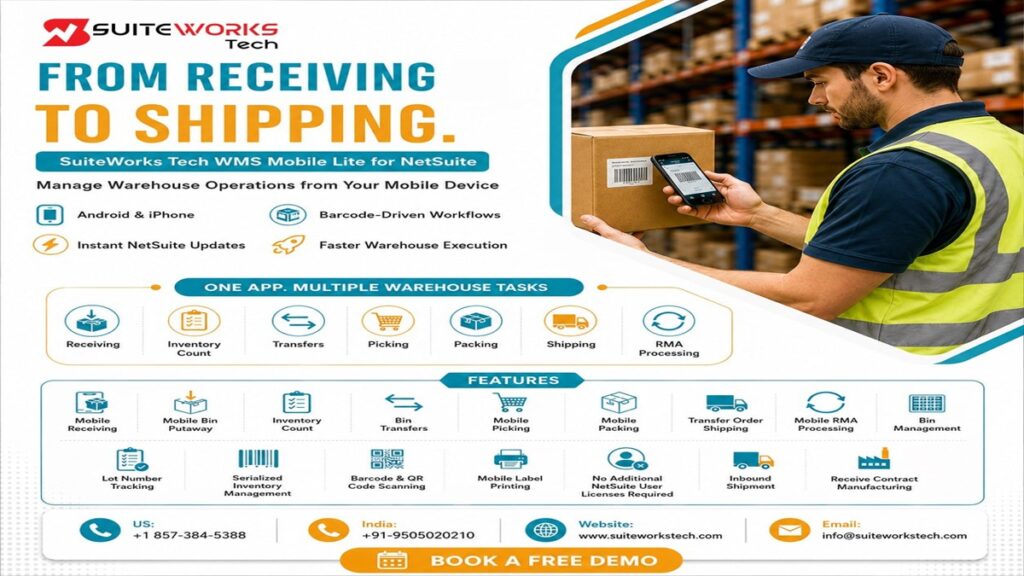
NetSuite Warehouse Management: 7 Signs Your Warehouse Has Outgrown Manual Workflows By Manasa, Sr. NetSuite Solution Architect at SuiteWorks TechSeptember 5, 2026 A warehouse can work perfectly well with manual processes—until it doesn’t. At first, receiving goods manually, writing down inventory counts, moving products between bins, and entering fulfillment information at a workstation may seem manageable. But as warehouse activity becomes more demanding, those extra steps can start creating delays, errors, and unnecessary work. A receiver may need to move between the warehouse floor and a workstation. A picker may manually enter information that could have been scanned. Inventory may be counted on paper before the quantities are updated in the system. Even something as simple as moving inventory from one bin to another can create another opportunity for inaccurate records. These situations are signs that a warehouse may have outgrown manual workflows. This is where NetSuite Warehouse Management can provide a more connected approach. By extending warehouse activities to mobile devices, businesses can bring receiving, putaway, picking, packing, shipping, inventory counting, transfers, and returns closer to where the work actually happens. The NetSuite WMS Mobile App by SuiteWorks Tech is designed around this idea. It works natively within NetSuite and gives warehouse teams mobile access to essential warehouse execution activities through Android and iOS devices. 7 Signs NetSuite Warehouse Management May Be the Next Step The decision to move away from manual warehouse workflows does not always happen because of one major problem. More often, several smaller challenges begin appearing together. Here are seven signs that a warehouse may benefit from a more mobile and connected approach. 1. NetSuite Warehouse Management Is Needed When Receiving Takes Too Many Steps Receiving is one of the first activities where manual processes can create friction. When goods arrive, warehouse employees need to validate items, quantities, lots, serial numbers, and bins. If those details are manually recorded and entered later, the warehouse has an additional layer between the physical receipt and the NetSuite record. With a mobile NetSuite Warehouse Management workflow, employees can receive inventory directly from an iPhone or Android device against NetSuite Purchase Orders. Barcode or QR code scanning can be used to validate the relevant information while inventory is updated in real time. Mobile Receiving Keeps Information Moving Inbound shipments can also be managed through the mobile application. Warehouse staff can view shipment details, receive items against associated purchase orders, and capture lot, serial, and bin information during the receiving process. This creates a more direct connection between what happens on the warehouse floor and what is recorded in NetSuite. 2. Manual Bin Placement Is Creating Inventory Location Problems 🔹 Receiving inventory is only the beginning; once goods arrive, they must be placed in the correct warehouse locations. 🔹 Relying on memory, paperwork, or manual entry can lead to inventory being placed in the wrong bin. 🔹 Manual processes can also cause inaccurate warehouse location records in the system. 🔹 NetSuite Warehouse Management supports mobile bin putaway through NetSuite Putaway Worksheets. 🔹 Employees can scan destination bins and items using mobile devices. 🔹 Scanning helps ensure that inventory is placed in the correct warehouse location. 🔹 The same mobile approach supports Bin Management during receiving, putaway, picking, transfers, and inventory counting. Why Accurate Bin Management Matters A warehouse can physically contain the right inventory but still have inaccurate system records if the location information is incorrect. Barcode scanning helps validate source and destination bins, creating a more structured process for keeping inventory locations accurate. 3. Picking Depends Too Much on Manual Data Entry Picking is another clear point where manual workflows can become difficult to manage. A warehouse employee needs to find the right item, pick the correct quantity, and connect the activity with the appropriate Sales Order. When information is manually entered, mistakes can occur during the process. With NetSuite Warehouse Management, warehouse employees can pick items against one or multiple NetSuite Sales Orders using barcode or QR code scanning. The mobile workflow provides real-time inventory validation while reducing the amount of manual data entry involved. Batch Picking Can Reduce Unnecessary Warehouse Travel High-volume warehouses may face another challenge: picking several orders can require multiple trips through the warehouse. Batch picking allows multiple NetSuite Sales Orders to be picked in a single trip. This can reduce warehouse travel time and help accelerate fulfillment. Instead of simply asking warehouse employees to move faster, the workflow makes their movement through the warehouse more purposeful. 4. Inventory Counts Still Depend on Paper Count Sheets Paper-based inventory counting is another sign that warehouse workflows may need to evolve. Employees may physically count inventory and record the numbers on paper before the information is entered into NetSuite. This creates another manual step and another opportunity for discrepancies. NetSuite Warehouse Management supports complete or partial inventory counts directly from mobile devices. Warehouse staff can count inventory by: 🔹 Item 🔹 Bin 🔹 Lot number 🔹 Serial number The counts can then be updated in NetSuite with accurate stock quantities. Mobile Counting Creates a More Direct Process Removing paper count sheets means warehouse employees can perform inventory counting directly where the inventory is located. The mobile workflow also supports lot-numbered and serialized inventory, helping maintain accurate information throughout the warehouse. 5. Warehouse Transactions Are Not Being Updated in Real Time Another important sign is a gap between what is happening physically and what is recorded in NetSuite. An item may have already been received, moved, picked, packed, or shipped while the system still reflects an earlier status. NetSuite Warehouse Management takes a different approach by synchronizing warehouse activities with NetSuite in real time. The NetSuite environment remains connected to warehouse execution, while the mobile application allows employees to complete activities through guided workflows. Each action can be validated through barcode scanning and synchronized with NetSuite. This helps maintain a single source of truth across finance, operations, and fulfillment teams. 6. Packing, Shipping, and Transfers Require Too Much Manual
NetSuite Android App: How Mobile Access Simplifies Inventory Transactions
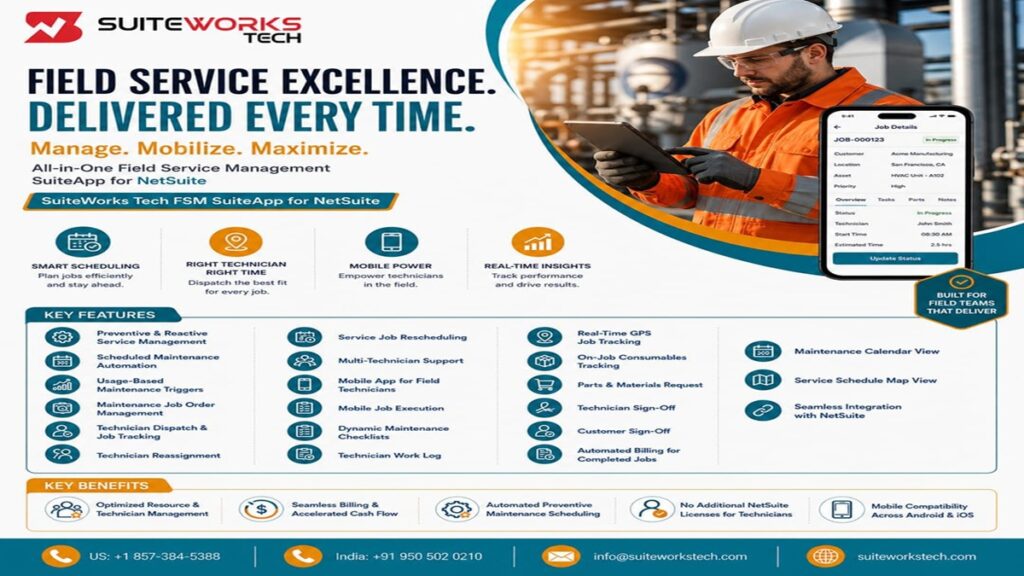
NetSuite Android App: How Mobile Access Simplifies Inventory Transactions By Manasa, Sr. NetSuite Solution Architect at SuiteWorks TechSeptember 4, 2026 A warehouse transaction often begins with a simple action: receive an item, scan it, move it to a bin, pick it for an order, or count the available stock. But when every transaction depends on manual entry, warehouse teams have to spend more time moving between physical inventory and system screens. The NetSuite ERP platform provides the broader business environment, while the NetSuite WMS Mobile App by SuiteWorks Tech focuses specifically on mobile warehouse execution. This is where a NetSuite Android App can make warehouse execution more practical. SuiteWorks Tech WMS Mobile Lite is designed to extend essential warehouse operations to mobile devices, including Android smartphones, while working natively inside NetSuite. Why a NetSuite Android App Matters for Inventory Transactions Inventory transactions happen throughout the warehouse. Receiving, putaway, picking, packing, shipping, transfers, counting, and returns all require accurate information. When warehouse staff can perform these activities directly from an Android device, the process becomes more closely connected to the physical movement of inventory. The NetSuite WMS Mobile App by SuiteWorks Tech supports mobile warehouse execution through guided workflows and barcode or QR code scanning. Warehouse teams can use the mobile app for: 🔹 Receiving goods against NetSuite Purchase Orders 🔹 Managing inbound shipments 🔹 Putting inventory into warehouse bins 🔹 Picking items against Sales Orders 🔹 Batch picking multiple Sales Orders 🔹 Packing completed orders 🔹 Shipping inventory 🔹 Processing Transfer Orders 🔹 Performing inventory counts 🔹 Moving inventory between bins 🔹 Processing RMAs 🔹 Tracking lot and serialized inventory These transactions can be performed from mobile devices while the information is synchronized with NetSuite. How NetSuite Android App Simplifies Receiving Receiving is one of the first points where inventory enters the warehouse. Accuracy at this stage is important because the received information becomes part of the inventory records. With the NetSuite Android App, warehouse employees can receive inventory directly from Android devices against NetSuite Purchase Orders. Instead of manually entering item information, users can scan barcodes or QR codes to validate: 🔹 Items 🔹 Quantities 🔹 Lot numbers 🔹 Serial numbers 🔹 Warehouse bins The information is updated in real time with NetSuite. The same mobile approach can also be used for inbound shipment management. Warehouse users can view inbound shipment details and receive items against their associated Purchase Orders while capturing the required lot, serial, and bin information. This makes receiving a mobile transaction rather than a process that requires constant movement between the warehouse floor and a workstation. Mobile Bin Putaway and Bin Management After receiving inventory, the next step may be moving it into the correct warehouse location. The mobile application supports bin putaway using NetSuite Putaway Worksheets. Warehouse employees can scan the destination bin and the item through their mobile device. Bin management is also supported across receiving, putaway, picking, transfers, and inventory counting. Barcode scanning helps validate source and destination bins, keeping inventory locations synchronized with NetSuite. NetSuite Android App for Faster Picking and Fulfillment Picking is another inventory transaction where mobile access can simplify daily warehouse work. Warehouse employees can pick items against one or multiple NetSuite Sales Orders using barcode or QR code scanning. The mobile workflow validates inventory while the user performs the picking activity. The solution also supports batch picking. Instead of completing individual picking trips for multiple Sales Orders, warehouse staff can pick several Sales Orders during a single trip. This can reduce warehouse travel time while supporting faster order fulfillment for high-volume operations. Once items are picked, mobile packing allows users to confirm packed quantities directly from the device. The NetSuite Item Fulfillment status can then be updated to Packed. Shipping can also be completed through the mobile app. Users can ship completed orders against one or multiple NetSuite Sales Orders and confirm shipments through barcode scanning. The related Item Fulfillment and inventory information is automatically updated in NetSuite. Managing Inventory Transfers and Counts From Android Inventory does not always stay in one location. Items may need to move between warehouse bins or between locations through Transfer Orders. The NetSuite Android App supports these transactions through mobile workflows. For bin transfers, users can scan items and source bins while moving inventory between warehouse locations. The transfer is synchronized with NetSuite so that inventory locations remain updated. Transfer Order shipping is also supported. Warehouse users can scan items and source bins from their mobile devices while processing inventory against NetSuite Transfer Orders. Inventory counting is another important transaction. Instead of relying on paper count sheets, warehouse teams can perform complete or partial inventory counts directly from mobile devices. Counts can be performed by: 🔹 Item 🔹 Bin 🔹 Lot number 🔹 Serial number The resulting quantities can then be updated in NetSuite. This mobile approach helps warehouse teams work directly with physical inventory while recording the transaction within the system. NetSuite Android App Makes Barcode Scanning More Accessible One of the defining capabilities of the mobile solution is barcode and QR code scanning. The built-in camera on Android devices can be used to scan barcodes and QR codes. Dedicated scanning hardware is not required. For warehouse employees, this means scanning can become part of everyday transactions. The same scanning capability supports activities such as: 🔹 Receiving 🔹 Putaway 🔹 Picking 🔹 Packing 🔹 Shipping 🔹 Bin transfers 🔹 Inventory counting 🔹 Lot tracking 🔹 Serialized inventory management By scanning instead of relying on manual data entry, warehouse users can perform transactions directly from their mobile devices. Lot and Serialized Inventory With Mobile Access Some inventory requires additional tracking information. Lot-numbered inventory needs lot traceability, while serialized inventory requires individual serial number tracking. The mobile solution supports lot-numbered inventory throughout warehouse activities. Users can receive, move, count, pick, and ship lot-numbered inventory using barcode scanning. Serialized inventory can also be managed through scanning individual serial numbers during: 🔹 Receiving 🔹 Inventory counts 🔹
NetSuite Barcode Scanning: How Distribution Teams Can Simplify Daily Transactions
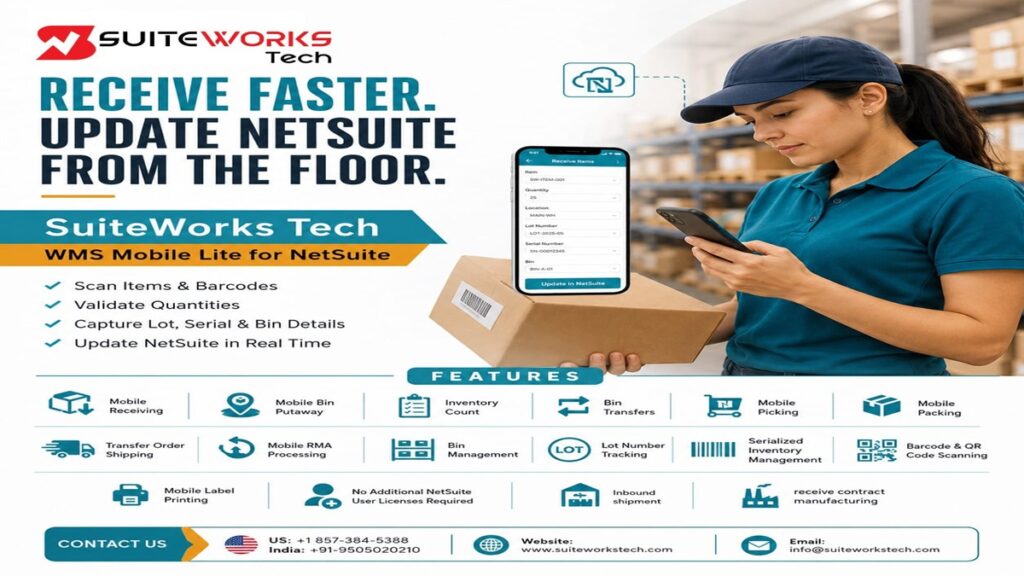
NetSuite Barcode Scanning: How Distribution Teams Can Simplify Daily Transactions By Manasa, Sr. NetSuite Solution Architect at SuiteWorks TechSeptember 2, 2026 Warehouse transactions happen throughout the day. Receiving takes place when goods arrive, inventory is moved into bins, orders are picked from warehouse locations, and completed orders move through packing and shipping. Each activity requires accurate inventory information in NetSuite. For warehouse employees, repeatedly entering item details manually can make these everyday processes more difficult. When physical warehouse activities and transaction updates are separated, employees may spend additional time moving between warehouse locations and workstations. NetSuite Barcode Scanning brings barcode and QR code scanning directly into mobile warehouse workflows. With a mobile device, warehouse employees can scan items and bins while completing receiving, picking, packing, shipping, inventory counting, transfers, returns, and other warehouse activities. The NetSuite WMS Mobile App by SuiteWorks Tech is designed around this mobile warehouse approach. SuiteWorks Tech WMS Mobile Lite is a lightweight SuiteApp built natively for NetSuite and available on Android and iPhone devices without requiring additional NetSuite user licenses for warehouse operators. Why NetSuite Barcode Scanning Matters for Distribution Teams Imagine a warehouse employee receiving a new shipment. The employee needs to verify the items, quantities, lots, serial numbers, and bins before the inventory is placed into the warehouse. With a traditional process, these details may involve manual entry. With NetSuite Barcode Scanning, employees can use the mobile device to scan barcodes or QR codes while performing the warehouse transaction. The mobile workflow allows teams to work closer to where the inventory is located while keeping information synchronized with NetSuite in real time. The SuiteWorks Tech WMS Mobile Lite workflow supports activities such as: 🔹 Receiving inventory against NetSuite Purchase Orders 🔹 Managing inbound shipments 🔹 Putting received inventory into warehouse bins 🔹 Picking items against Sales Orders 🔹 Batch picking multiple Sales Orders 🔹 Packing completed orders 🔹 Shipping inventory 🔹 Performing inventory counts 🔹 Moving inventory between bins 🔹 Processing customer and vendor returns 🔹 Managing lot-numbered and serialized inventory This approach helps distribution teams connect physical warehouse activity with NetSuite transactions. NetSuite Barcode Scanning for Receiving, Putaway, and Bin Management Receiving is one of the first places where inventory accuracy matters. When goods arrive at the warehouse, employees need to receive the correct items and quantities against NetSuite Purchase Orders. The mobile receiving workflow allows warehouse staff to scan barcodes or QR codes to validate items, quantities, lots, serial numbers, and bins. Inventory information can be updated in real time as the receiving process takes place. Managing Inbound Shipments Inbound shipments can also be managed from the mobile application. Employees can view inbound shipment information, receive items against associated purchase orders, and capture lot, serial, and bin information during receiving. Once the inventory is received, it needs to reach the correct warehouse location. Mobile Bin Putaway The mobile putaway workflow allows warehouse staff to use NetSuite Putaway Worksheets while working from their mobile devices. Employees can scan the destination bin and item to help ensure inventory is placed in the correct location. Bin Management also supports source and destination bin validation during receiving, putaway, picking, transfers, and inventory counting. NetSuite Barcode Scanning for Picking and Batch Picking After inventory has been received and stored, the next transaction may be order picking. Warehouse employees need to locate the correct product and confirm the required quantity. The NetSuite WMS Mobile App by SuiteWorks Tech allows users to pick items against one or multiple NetSuite Sales Orders using barcode or QR code scanning. Real-time inventory validation helps reduce picking errors while allowing warehouse employees to complete the activity directly from the warehouse floor. Batch Picking Multiple Sales Orders For warehouses handling multiple orders, batch picking can reduce unnecessary warehouse travel. Employees can pick multiple Sales Orders in a single trip rather than completing separate trips for each order. This helps reduce warehouse travel time and supports faster fulfillment for high-volume operations. Mobile Packing Once items have been picked, warehouse employees can confirm packed quantities from the mobile application. The NetSuite Item Fulfillment status can then be updated to Packed, providing better visibility before the order proceeds to shipping. Improving Inventory Accuracy with Mobile Scanning Inventory accuracy depends on knowing what inventory is available and where it is located. NetSuite Barcode Scanning allows employees to use the built-in camera on Android or iPhone devices to scan barcodes and QR codes. Dedicated scanning hardware is not required. This mobile scanning capability can be used throughout different inventory activities. Mobile Inventory Counting Warehouse teams can perform complete or partial inventory counts directly from a mobile device without using paper count sheets. Employees can count inventory by: 🔹 Item 🔹 Bin 🔹 Lot 🔹 Serial number The resulting quantities can then be updated in NetSuite. Bin Transfers Inventory can be moved between warehouse bins using barcode scanning. Employees can scan inventory and complete the transfer from their mobile device. Each transfer is synchronized with NetSuite, helping maintain accurate inventory locations. Lot and Serial Number Tracking Lot-numbered inventory can be received, moved, counted, picked, and shipped using barcode scanning. Serialized inventory can also be managed by scanning individual serial numbers during receiving, inventory counts, transfers, picking, packing, shipping, and returns. This helps support product traceability while reducing manual serial number entry. NetSuite Barcode Scanning for Packing, Shipping, and Transfers Warehouse activities continue after picking. Completed orders need to be packed and shipped, and each transaction needs to remain connected with the corresponding NetSuite records. The mobile application allows warehouse employees to ship completed orders against one or multiple NetSuite Sales Orders. Shipments can be confirmed using barcode scanning while Item Fulfillment and inventory information are automatically updated in NetSuite. Transfer Order Shipping Inventory moving between warehouse locations can also be handled through mobile workflows. Employees can scan items and source bins when shipping inventory against NetSuite Transfer Orders. This helps support accurate inter-warehouse inventory movement while keeping NetSuite updated. The result is a













Working with SuiteWorks Tech on our AI Ordering Chatbot for NetSuite was outstanding. They delivered quickly, professionally, and with impressive attention to detail. I’m thrilled with the results and highly recommend their services.
Craig Michaud Partner, Evolve Salon Systems